Home › Food, festivals & culture
TOP 10 Fruits in Thailand
Food, festivals & culture8 September 20196 min read

 One of the best-known fruits in Thailand is the mango. In Thailand, however, there are two different types of mango: the ripe yellow one, which is very soft, sweet and juicy, and the unripe green mango, which is popular among Thais.
The yellow mango is used for juices, shakes and the very popular dessert Mango Sticky Rice, which is called Khao Niao Mamuang in Thai. You'll find it in almost every restaurant or market on Koh Samui. A must in Thailand.
The green mango is a famous snack among Thais, usually bought from street vendors. The green mango tastes sour and is paired with a dip made of sugar and chilli, which makes it a unique treat. It's not to everyone's taste, but if you get the chance, you should try it at least once.
One of the best-known fruits in Thailand is the mango. In Thailand, however, there are two different types of mango: the ripe yellow one, which is very soft, sweet and juicy, and the unripe green mango, which is popular among Thais.
The yellow mango is used for juices, shakes and the very popular dessert Mango Sticky Rice, which is called Khao Niao Mamuang in Thai. You'll find it in almost every restaurant or market on Koh Samui. A must in Thailand.
The green mango is a famous snack among Thais, usually bought from street vendors. The green mango tastes sour and is paired with a dip made of sugar and chilli, which makes it a unique treat. It's not to everyone's taste, but if you get the chance, you should try it at least once.
 The guava doesn't originally come from Thailand and was brought into the country by the French. Fun fact: the Thai name for guava is Farang, which actually means "non-Asian" in Thai. This was probably caused by the fact that the Thai name for France is Farangset. The guava looks like a green apple but is much sweeter. Thais even enjoy eating guava while it's still unripe, mixing it with a dip of chilli and sugar, which turns the flavour into a combination of sweet and spicy.
 The longan, sometimes called the dragon eye, is a soapberry plant like the lychee. This tropical fruit comes from Southeast Asia and resembles the lychee in many ways. The shape is also small and round, with white flesh inside and a black seed. Hence the name dragon eye, since with a bit of imagination that's what a longan looks like. The taste is similar to lychee, though a little less sweet, and it's also rich in nutrients and other benefits. Longan is said to have anti-aging, anti-cancer and anti-inflammatory effects. In some cases, the fruit is also used in traditional medicine across Asia.
 The rambutan is a kind of hairy fruit - at least, that's what it looks like from the outside. It belongs to the lychee family, and some people call it the hairy lychee. Rambutan is very popular in Thailand, but you can also find it in neighbouring Vietnam or Malaysia. Inside the shell is white flesh with a seed, which is very healthy for you. Rambutan contains plenty of vitamins as well as calcium, magnesium and protein. If you get the chance to try it, you should. Almost everyone likes the sweet taste.
 Probably the most popular fruit in Thailand, since it's the main ingredient of the famous Som Tam papaya salad. This particular salad uses an unripe papaya, which you can recognise by its green skin on the outside and its firmer, white flesh on the inside.
But there's also another type of papaya, a ripe one, which doesn't resemble the green one at all. On the outside, the ripe papaya is yellow/orange, and inside it has orange-ish flesh. When the papaya is ripe, it's very soft and sweet. Both types of papaya are available almost everywhere in Thailand, in supermarkets and fresh markets, and at least the sweet one can be bought from many fruit vendors on the street.
Probably the most popular fruit in Thailand, since it's the main ingredient of the famous Som Tam papaya salad. This particular salad uses an unripe papaya, which you can recognise by its green skin on the outside and its firmer, white flesh on the inside.
But there's also another type of papaya, a ripe one, which doesn't resemble the green one at all. On the outside, the ripe papaya is yellow/orange, and inside it has orange-ish flesh. When the papaya is ripe, it's very soft and sweet. Both types of papaya are available almost everywhere in Thailand, in supermarkets and fresh markets, and at least the sweet one can be bought from many fruit vendors on the street.
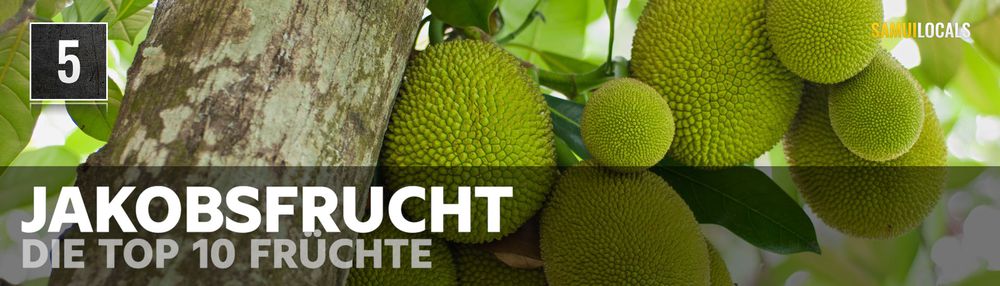 From the outside, the skin of the jackfruit looks similar to durian, since it's also spiky and grows very large. But as soon as you open it, you'll notice the difference. The smell isn't as intense as durian and is quite pleasant.
Inside the shell are lots of small yellow segments that you can eat. They're all arranged around a huge core, which makes them easy to remove. Usually, when you buy jackfruit, it's already sold pre-cut into portions.
The taste of jackfruit is a bit hard to describe. It's a combination of many flavours - a bit of pineapple, a bit of banana, a bit of vanilla - but still fruity. It's a truly exotic fruit that you won't come across every day.
From the outside, the skin of the jackfruit looks similar to durian, since it's also spiky and grows very large. But as soon as you open it, you'll notice the difference. The smell isn't as intense as durian and is quite pleasant.
Inside the shell are lots of small yellow segments that you can eat. They're all arranged around a huge core, which makes them easy to remove. Usually, when you buy jackfruit, it's already sold pre-cut into portions.
The taste of jackfruit is a bit hard to describe. It's a combination of many flavours - a bit of pineapple, a bit of banana, a bit of vanilla - but still fruity. It's a truly exotic fruit that you won't come across every day.
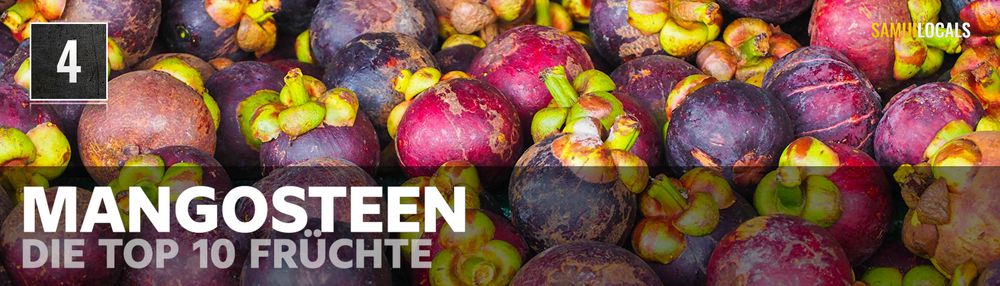 In contrast to durian, the king of fruits, mangosteen is the queen of fruits. The fruit's taste leans more sour than sweet, though not too strongly like lime. Mangosteen is said to lower body temperature, so it's good if you have a fever. The mangosteen's rind looks a bit like leather, and you have to crack it open to eat it. When the mangosteen is ripe and ready to eat, the rind should be smooth and glossy.
It's also banned in some hotels, though not as much as durian. This isn't because of the smell, but because the rind's dark colour can leave stains. Don't worry though - mangosteen is easy to open, even if you've never held one before.
In contrast to durian, the king of fruits, mangosteen is the queen of fruits. The fruit's taste leans more sour than sweet, though not too strongly like lime. Mangosteen is said to lower body temperature, so it's good if you have a fever. The mangosteen's rind looks a bit like leather, and you have to crack it open to eat it. When the mangosteen is ripe and ready to eat, the rind should be smooth and glossy.
It's also banned in some hotels, though not as much as durian. This isn't because of the smell, but because the rind's dark colour can leave stains. Don't worry though - mangosteen is easy to open, even if you've never held one before.
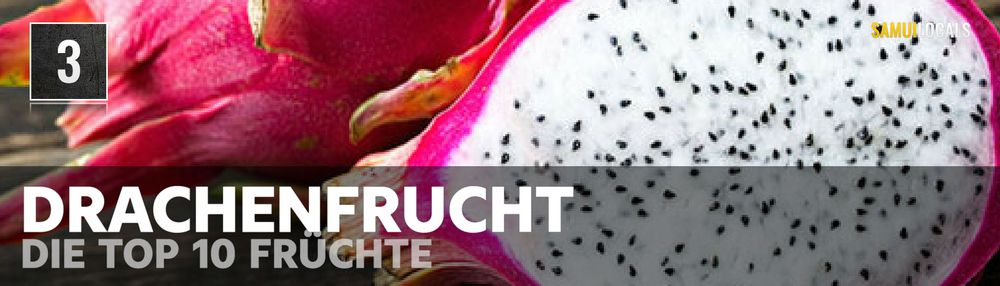 The first thing that stands out about dragon fruit is its striking colour. With its bright pink skin, it stands out from all other fruits. Inside you'll find white flesh similar to a kiwi, just white instead of green. By the way, it grows on a type of cactus. You can eat the fruit very easily by cutting it in half and just eating the healthy flesh. It contains vitamin C, calcium, iron and much more, and is also low in calories. The perfect fruit to bite into without piling on the pounds.
 Durian is called the "king of fruits", and most Asians, and of course Thais, love this fruit. It's probably also the most expensive fruit you can buy in Thailand. However, durian also has a nickname - the stink fruit. This name mostly comes up among foreigners and comes from its intense smell, though that's a matter of taste. Because of this strong smell, durian is often banned in hotel rooms or on public transport.
It's not easy to describe the actual taste of durian if you've never tried it. If you get the chance, you should definitely try it at least once. We'd describe the taste as a combination of something creamy and pudding-like. It doesn't really have the texture of a fruit. The flavour is somewhat reminiscent of a combination of vanilla, caramel and jackfruit. By the way, a durian looks spiky and often huge from the outside.
Durian is called the "king of fruits", and most Asians, and of course Thais, love this fruit. It's probably also the most expensive fruit you can buy in Thailand. However, durian also has a nickname - the stink fruit. This name mostly comes up among foreigners and comes from its intense smell, though that's a matter of taste. Because of this strong smell, durian is often banned in hotel rooms or on public transport.
It's not easy to describe the actual taste of durian if you've never tried it. If you get the chance, you should definitely try it at least once. We'd describe the taste as a combination of something creamy and pudding-like. It doesn't really have the texture of a fruit. The flavour is somewhat reminiscent of a combination of vanilla, caramel and jackfruit. By the way, a durian looks spiky and often huge from the outside.
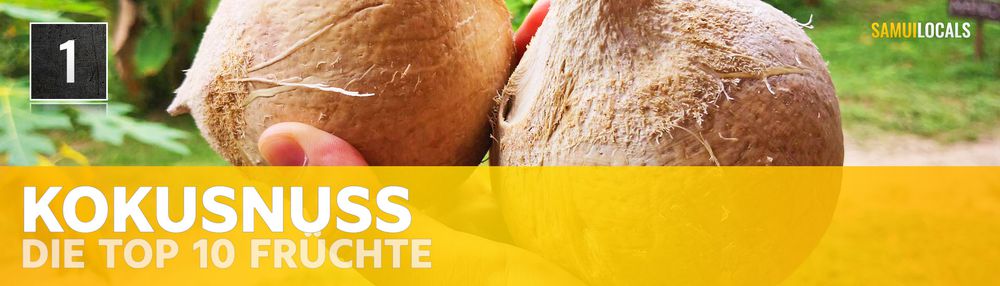 The coconut is a symbol of exotic countries, islands and beaches like Thailand. Many islands, including Koh Samui, have lots of coconut plantations, and you'll probably already spot them when arriving by plane. Since there are so many coconuts on Koh Samui, you can buy them quite cheaply from street vendors or supermarkets for 20 to 40 Baht. Expect to pay a lot more in restaurants or bars if you order a fresh coconut. Coconut water tastes very refreshing, and you can also eat the coconut flesh inside, ideally with a spoon.
Of course, besides the fresh coconut there are also many other varieties. There are also roasted coconuts, coconut shakes, ice cream, juices and much more. The variety is huge, and since coconut is fairly healthy, it's a truly excellent fruit that you should have once a day.
The coconut is a symbol of exotic countries, islands and beaches like Thailand. Many islands, including Koh Samui, have lots of coconut plantations, and you'll probably already spot them when arriving by plane. Since there are so many coconuts on Koh Samui, you can buy them quite cheaply from street vendors or supermarkets for 20 to 40 Baht. Expect to pay a lot more in restaurants or bars if you order a fresh coconut. Coconut water tastes very refreshing, and you can also eat the coconut flesh inside, ideally with a spoon.
Of course, besides the fresh coconut there are also many other varieties. There are also roasted coconuts, coconut shakes, ice cream, juices and much more. The variety is huge, and since coconut is fairly healthy, it's a truly excellent fruit that you should have once a day.
Keep reading

Full Moon Party on Koh Phangan, Thailand
Full Moon Party on Koh Phangan: thousands of travelers flock to Haad Rin to dance, party, and experience this legendary full moon night.
Food, festivals & culture15 min
Photo: Antonio Araujo / Unsplash

Top 10 Souvenirs From Thailand
Souvenirs from Thailand - on every trip you ask yourself what to bring home for loved ones. Here are our top 10 souvenirs from Thailand.
Food, festivals & culture6 min
Photo: Zoshua Colah / Unsplash

TOP 10 Events in Thailand
Koh Samui and Thailand host a whole range of exciting events, some happening only once a year and others every single month.
Food, festivals & culture7 min
Photo: Mandy H / Unsplash