Home › Food, festivals & culture
Top 10 Souvenirs From Thailand

Souvenirs from Thailand — on every trip, sooner or later you ask yourself what to bring home for the people you love. Plenty of spur-of-the-moment buys end up as dust collectors in a box. Here's our top 10 souvenirs from Thailand — and, new in this update, a clear rundown of what's better left in the shop because of export rules.
Our top 10 souvenirs
1. Folding fruit basket

A genuinely original, space-saving design: this collapsible wooden basket works as a table decoration, fruit bowl or gift basket, and doubles as a practical mat. It's sturdy, neatly made, and its light, modern look fits almost any home. You'll mostly find it at the travelling markets that pop up in a different location every day of the week.
Read more about these markets here: Top 10 night markets on Koh Samui.
2. Traditional placemats

These decorative, woven bamboo placemats usually come in several colours, such as red, bronze and green. A set typically has 8 pieces: 4 large mats and 4 small coasters for glasses. Low-maintenance and well made, and at around 46 x 33 cm large enough to work as décor beyond the dining table too.
3. Handbags and bags
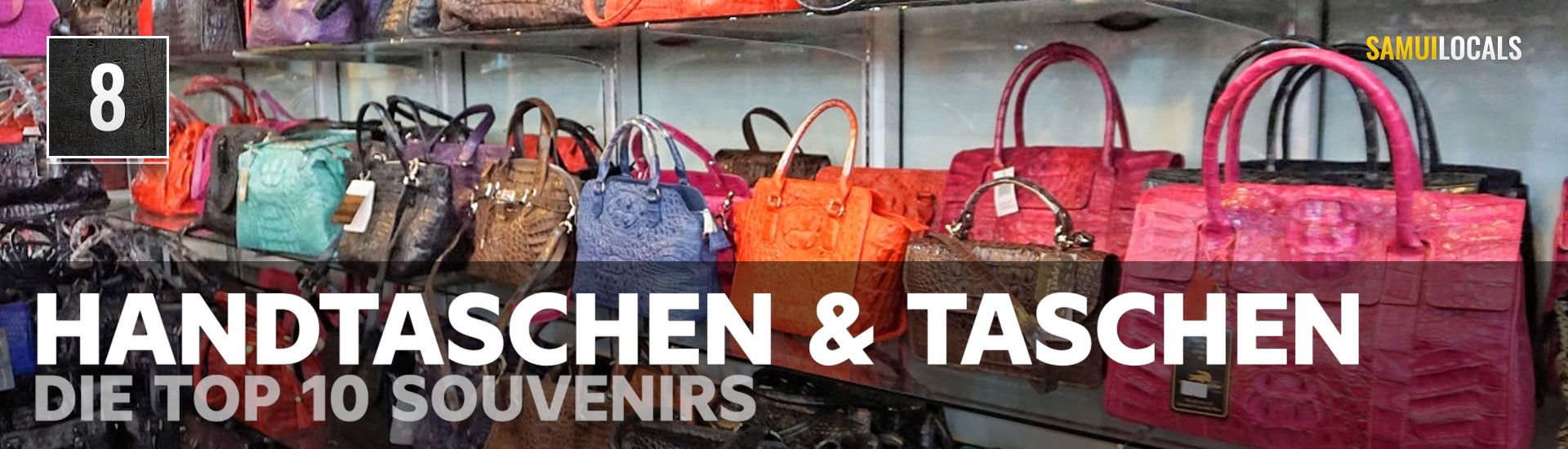
The choice of handbags in Thailand is often bigger than back home — from natural materials like bamboo, coconut or denim to lookalikes of well-known brands. You'll mostly find them in small shops and on walking streets, in plenty of sizes, colours and price ranges. Bargaining is part of the deal once you've picked something out.
Worth knowing before you fly home: even well-made lookalikes of branded goods count as counterfeit under customs law and are confiscated if found, regardless of what you paid. Large shopping malls, on the other hand, sell genuine branded goods — usually at prices similar to, or even higher than, back home.
4. Hand-carved soaps

In countless boutiques and at the travelling markets you'll find soaps intricately carved into flowers or other shapes, packaged in a small wooden bowl — a lovely little gift. They also come in fruit shapes with matching scents, usually at a low price.
5. Clothing and silk

Thai silk is something special thanks to its hand-weaving process: the silkworms are specially fed on mulberry leaves before being turned into a soft, high-quality fabric. From it you can have scarves, made-to-measure shirts, ties, cushion covers or bags made — a tailored suit or a silk shirt often costs well below what you'd pay at home. Allow at least a few days for the work, and get measured properly beforehand.
6. Tuk-tuk model

The tuk-tuk, a motorised three-wheeler, has become a national symbol of Thailand and a popular way for tourists to get around for short distances. Model replicas — often with colourful underbody lighting and a loud sound system on the real thing that inspired them — are found mainly in Bangkok, but also at markets around the country.
7. Muay Thai shorts

Muay Thai is Thailand's best-known national sport. The short, hard-wearing shorts come in sizes from toddlers up to 3XL, in plenty of colours and from well-known brands like Venum, Twins Special and Thaismai, sold in most sports shops and small clothing stores. Fancy trying it yourself? Koh Samui has bookable training camps — see our Top 10 gyms on Koh Samui.
8. Wood carvings

The elephant is an authentic symbol of Thailand — as an ornament, painting, wood carving or on a bag. The cheapest carvings are found at the travelling markets, which is also where bargaining works best and sellers will often pack your purchase securely for travel.
One exception: if a piece is specifically marketed as rosewood (Siamese rosewood) or another protected wood species, leave it in the shop — export is restricted or banned. Ordinary, unremarkable carving wood isn't affected by this.
9. Spice mixes and sauces

The delicate spice blends behind Thai cuisine come ready-packaged at many markets and in the big supermarkets — not everything is fiery, some curry pastes are mild but still packed with flavour. Our favourite: green curry with coconut milk.
10. Coconut products

Coconut oil is popular as a natural skincare and cooking product, and the flesh gets turned into ice cream or sweets. On Koh Samui you'll also find decorative coconut souvenirs such as lampshades or carved figures, sold at the travelling markets and in plenty of small shops around the island.
What's better left in the shop: export rules for souvenirs
Most of the souvenirs above are perfectly straightforward. A few categories are worth a second look before you pack them, though:
- Buddha images: antiques or images classed as artwork/cultural property need an export permit from the Fine Arts Department (form Sor Kor 6, applied for at the Office of National Museums in Bangkok with photos and proof of purchase; processing usually takes 3-5 working days). Small, mass-produced souvenir Buddhas from a tourist shop are usually taken home without a permit in practice — but keep the receipt. Regardless of the customs question, Buddha images are treated as sacred, not as floor decor or something to sit on.
- Ivory: don't. Even though a registered domestic ivory trade is legal within Thailand, exporting it is essentially always prohibited, and it's confiscated at customs on arrival back home, often with a fine.
- Coral, shells, tortoiseshell, protected wood: just as restricted as ivory, with no personal-use exemption (the only exception found applies to a small number of giant clam shells). The same goes for furniture or carvings made from Siamese rosewood. Rule of thumb: if a souvenir is clearly made from a dead animal or a rare wood species, leave it.
- Bringing it into your home country: for EU travellers, a common example is a duty-free allowance of around €430 per person arriving by air or sea (€300 overland) — check your own country's customs rules, since these figures vary. Counterfeit branded goods are confiscated regardless of value.
Where to buy souvenirs on Koh Samui
You'll find the best selection at the island's night markets — see our Top 10 night markets on Koh Samui. Fisherman's Village Walking Street in Bophut runs on Friday evenings, and Chaweng Walking Street runs every evening. In Nathon Town, the island's main town, silk, handicrafts and tailoring are often cheaper than in the tourist resorts. If you'd rather not organise it yourself, there's a round-trip transfer to the Fisherman's Village night market:
 from 1,080 THBFisherman´s Village Night Market Round-Trip Transfer 3 Hours Koh Samui5.00 from 1 reviews
Bargaining at the market
Haggling is normal at open-air markets — a common opening counter is around 40-55% of the first price quoted, and staying friendly gets you further than hard bargaining. In 7-Eleven, malls and shops with fixed price tags, though, bargaining isn't done.
Frequently asked questions
Can I take a Buddha figure home from Thailand?
Small, modern souvenir figures from a tourist shop are usually taken home without a permit in practice. Buddha images classed as antiques or artwork, on the other hand, need an export permit from the Fine Arts Department.
Can I bring ivory or coral jewellery back from Thailand?
No. Both are among the most strictly controlled categories, get confiscated at customs on arrival home, and can carry a fine. Best not to buy them at all.
Where's the best place to buy souvenirs on Koh Samui?
At the night markets, above all the Fisherman's Village Walking Street on Fridays in Bophut and the daily Chaweng Walking Street, plus Nathon Town for silk and handicrafts.
How do you bargain properly at Thai markets?
Keep it friendly and relaxed: start at around 40-55% of the first price and work up from there. In convenience stores, malls and shops with price tags, bargaining isn't expected.
For more on Thai flavours, see our Top 10 Thai dishes, for more tropical treats see our Top 10 fruits in Thailand, and for the right market evenings see our Top 10 night markets on Koh Samui.
Keep reading
No-Gos in Thailand: Rules and Taboos Every Visitor Should Know
No-gos in Thailand for 2026: the monarchy, temple etiquette, drugs, e-cigarettes, alcohol sale hours and overstay fines – explained with sources.

Full Moon Party Koh Phangan: Dates, Entry Fee and Getting There
Full Moon Party Koh Phangan 2026/2027: official dates, entry fee, safe transport from Koh Samui and the key safety tips for the night.

Top 10 Events and Festivals in Thailand and on Koh Samui
Every major Thai festival for 2026/2027 at a glance – and which ones actually happen on Koh Samui: the Regatta, Green Market, Loy Krathong, Songkran.