Top 10 Misconceptions About Thailand

Who hasn't come across the common stereotypes we're confronted with every day? Both Europe and Thailand have their fair share of misconceptions that aren't always true. In this article, we get to the bottom of the top 10 misconceptions about Thailand and check for 2026 how much truth there really is to them.
10. The rainy season makes Thailand uninhabitable

In short: no. The exact rainy season varies a lot from place to place and rarely lasts longer than a few weeks to about a month — and it practically never rains non-stop. On Koh Samui, the main rainy season usually falls between October and December, often with heavy but short bursts of rain rather than continuous downpours. For more on this, including the best months to travel, see our article Koh Samui weather and the truth about the rainy season. And even on a rainy day, the island offers plenty to do, indoors and out.
9. Thailand is drowning in rubbish
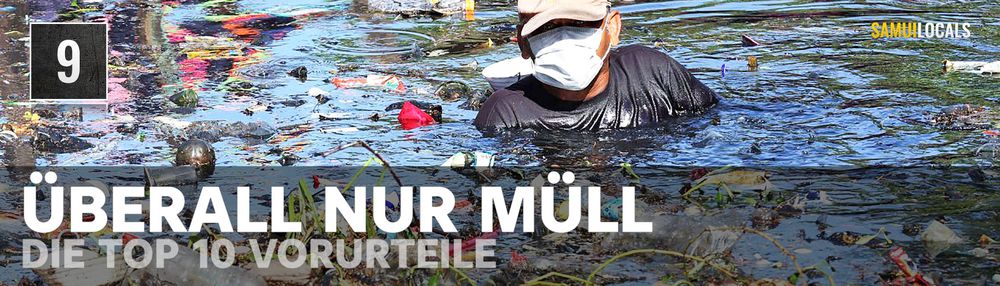
The picture some Western media paint is, in practice, usually limited to a handful of very busy corners of the big tourist hubs like Bangkok, Pattaya or Phuket — on some days genuinely large amounts of rubbish do pile up there, and those spots then get used as a stand-in image for "the whole of Thailand". The reality is more nuanced, and the legal picture has moved on since: since 1 January 2020, Thailand's big supermarket and department store chains, along with 7-Eleven branches, have gone nationwide without free single-use plastic bags. On Koh Samui, the volunteer initiative Trash Hero Koh Samui also runs free weekly beach clean-ups that anyone can join without signing up. Littering is a problem everywhere in the world — singling out Thailand for it doesn't reflect reality.
8. Thailand is full of ladyboys

Transgender women, often referred to in Thailand as kathoey, are genuinely more visible in public life than in most Western countries, and often work in roles with plenty of tourist contact, such as spas, shows or retail. Spend most of your time in the big tourist areas, and you'll naturally notice this more — but that doesn't mean it holds true for the whole country. Legally and socially, things have moved recently: since 22 January 2025, Thailand has recognised same-sex marriage under the Marriage Equality Act. A separate law allowing people to change their official gender marker (a Gender Recognition Act) has been debated in parliament for years but, as of 2026, still hasn't been passed. Sweeping claims about rejection by one's own family, on the other hand, can't be seriously substantiated and shouldn't be generalised.
7. Every massage ends with a "happy ending"

Massages with a sexual extra do exist in Thailand, no question. But assuming that's true of every parlour is wrong: you'll find reputable spas and massage studios on practically every street corner, and asking for that kind of service there is more likely to cause confusion — among the generally conservative staff, such a request is seen as disreputable and turned down. A good sign of a legitimate business is matching uniforms and visible licences or training certificates near the entrance. Massage parlours with very skimpily dressed staff, on the other hand, tend to point to a different kind of offer.
6. Elephants in Thailand are always mistreated

For centuries, the elephant has been considered a working animal in Thailand, much like the horse or ox once was in Europe. Elephants have a strong natural urge to move; when that's heavily restricted, health and behavioural problems follow. Riding and circus-style shows have therefore come under growing criticism for years from animal welfare organisations such as World Animal Protection, which endorses only the so-called "observation-only" model: visitors watch the animals up close without riding, bathing them or queuing to feed them. Several well-known parks in Thailand have scaled back or reworked their riding and bathing offers in recent years. If you'd like to get close to an elephant without riding one, Koh Samui has an option like this:
 from 900 THBKoh Samui Elephant Home Animal Shelter Feeding Activity5.00 from 14 reviews
5. Taxi drivers rip you off

This misconception is actually partly true: especially in tourist areas, some taxi drivers refuse to use the mandatory meter and quote a flat fare instead. Negotiate a little, though, and you'll usually still get a fair price — the phrase "tao rai" (เท่าไหร่, "how much?") helps here. If you voluntarily agree to an inflated price, it's a stretch to complain about being "ripped off" afterwards. On Koh Samui itself, most official taxis work with fixed price lists rather than a meter anyway, roughly 400 to over 1,000 baht for an airport transfer depending on distance. In Bangkok, on the other hand, metered fares are a legal requirement; the flag-fall in 2026 is 35 baht for the first kilometre — even allowing for some traffic, a taxi ride there stays cheap by European standards. You'll find all the current prices and alternatives, such as songthaews, motorbike taxis or ride-hailing apps, in our article Getting around Koh Samui. If even that feels too pricey, a rental scooter on Koh Samui costs roughly 140 to 350 baht a day depending on the model and area — enough to get almost anywhere yourself.
4. Thai food is unhygienic

A widespread misconception. Thai street kitchens might not always look "tidy" to Western eyes, but unlike in most restaurants, you get to watch exactly how your food is freshly prepared right in front of you. The ingredients usually come straight from the nearby market, where they're cheapest and freshest. Thai cuisine is rated among the best in the world for good reason — one more reason to trust a busy street kitchen. A simple rule of thumb: plenty of passing custom and fast turnover of ingredients is more a good sign than a bad one.
3. Thai smiles are just put on

In fact, the Thai smile has a genuine cultural root and isn't just a front: saving face and defusing conflict calmly rather than confronting it head-on is one of the defining social values here. Language plays a part too — certain vowels and syllables are pronounced with a broad smile, such as the long "ii" in words like "mii" (to have). The Western handshake greeting is fairly unusual; instead, many Thais respond with a smile or the wai, the pressed-palms gesture in front of the chest. Awkward situations are often smiled away out of politeness rather than confronted openly.
2. Everything in Thailand is dirt cheap

A widespread misunderstanding: that Thailand — and especially tourist hubs like Koh Samui, Phuket or Pattaya — is uniformly dirt cheap. That's no longer entirely true: imported goods such as Western food, cheese or foreign beer are often noticeably pricier than expected because of import duties and costs, and Koh Samui overall sits noticeably above mainland Thailand's price level. Compared directly with many European destinations, though, the island still spans a wide price range: a frugal day with a hostel, street food and songthaews comes to roughly 21 to 37 euros, while a comfortable day with a resort and restaurants runs to 130 euros or more. You'll find exact, current prices for accommodation, food, transport and excursions in our article How much does a holiday on Koh Samui cost? If you're trying to save, research ahead and book early.
1. Most tourists only come for sex tourism

Probably the most common misconception of all. This perception mostly dates back decades and overlooks the fact that prostitution is a global phenomenon by no means confined to Thailand. The vast majority of Thailand travellers never come into contact with that scene at all. In everyday life, Thai women and men tend to dress fairly conservatively, and public displays of affection are unusual. What actually defines Thailand is its spiritual temple complexes, breathtaking nature, one of the world's most varied cuisines, warm hospitality and dream beaches — there's something here for pretty much every taste.
Frequently asked questions
Is Thailand uninhabitable during the rainy season?
No. Depending on the region, the rainy season usually lasts only a few weeks to about a month and rarely brings continuous rain — on Koh Samui it mostly falls between October and December, often with short, heavy bursts rather than constant rain.
Do taxi drivers in Thailand always rip you off?
Not always, but in tourist areas some taxi drivers skip the meter and quote a flat fare instead. Negotiate beforehand, or insist on the legally required meter in Bangkok, and you'll generally pay a fair price.
Is Thai street food unhygienic?
Not as a rule. At busy street kitchens you can watch the food being prepared right in front of you, and the ingredients are usually fresh from a nearby market. A busy crowd of customers is more a good sign than a bad one.
Do most tourists only travel to Thailand for sex tourism?
No. The vast majority of travellers never encounter that scene at all; Thailand draws visitors chiefly for its culture, nature, food, hospitality and beaches.
For more background, see our articles Top 10 things we can learn from Thailand, Western double standards: tiger tourism in Thailand fact-checked and Top 10 scooter rules on Koh Samui.
Keep reading

Is Every Koh Samui Elephant Sanctuary a "Fake"?
Not every Koh Samui elephant sanctuary is a fake: which camps genuinely skip riding and shows in 2026, and how to spot the ones that don't.

Top 10 Things We Can Learn From Thailand
From the bum gun to smiling more: 10 things we can genuinely learn from Thailand, fact-checked with real numbers (2026).

How to Spot Legitimate Tour Operators in Thailand
Check the TAT licence, spot the warning signs: how to tell legitimate tour operators and guides in Thailand apart from unlicensed ones in 2026.