Dengue Fever Thailand: A Danger on Your Trip?!

Dengue fever in Thailand. Let's say this upfront: don't panic. The odds of catching dengue fever as a tourist on Koh Samui are low. But the residual risk is real, and if it does get you, it can range from unpleasant to genuinely rough - I can say that from personal experience. Here are the key facts on transmission, symptoms, treatment, the current vaccine advice, and the latest case numbers for 2025/2026, each backed by an official source.
Important note upfront: this article is not a substitute for medical advice. If you suspect dengue fever - especially with persistent high fever - see a clinic or hospital on Koh Samui promptly, and talk to a travel medicine or tropical medicine doctor about any questions on vaccination.
How is dengue fever transmitted?
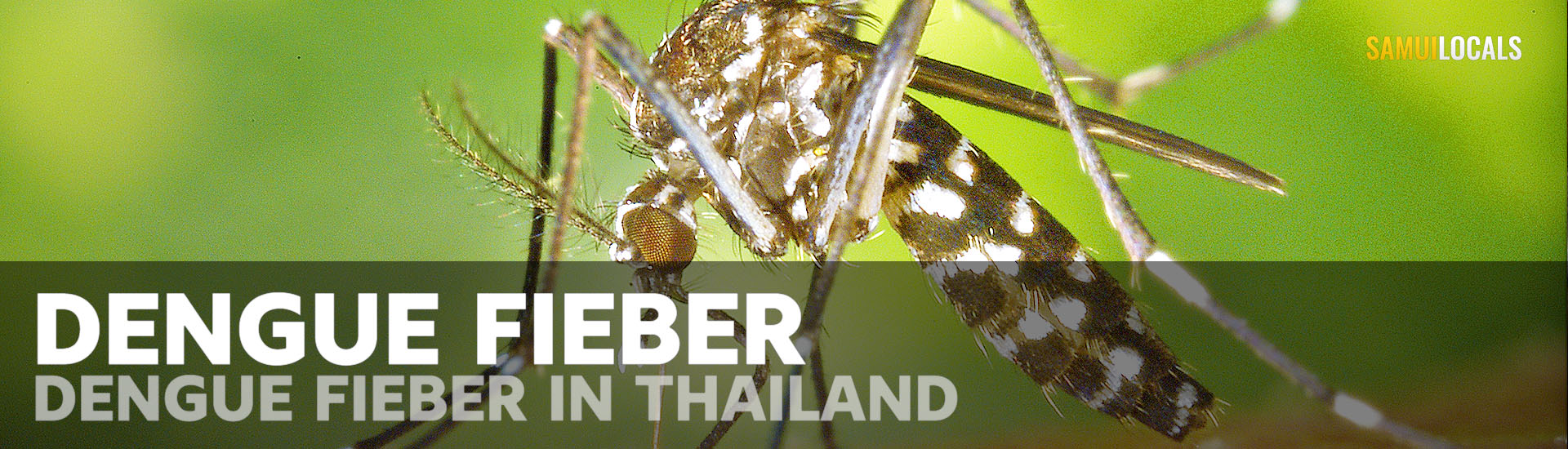
Dengue fever is transmitted by the bite of infected Aedes mosquitoes, chiefly Aedes aegypti (yellow fever mosquito) and Aedes albopictus (Asian tiger mosquito), according to the German Federal Foreign Office. Unlike many people assume, this mosquito bites during the day and at dusk, not at night. There are four virus serotypes (DENV-1 to DENV-4); having had one gives you future immunity to that specific serotype only, not the other three - and a second infection with a different serotype tends to run a more severe course than the first.
The incubation period - the time from the mosquito bite to the first symptoms - is 3 to 14 days, according to the RKI and the Federal Foreign Office. So if you're already back home and suddenly develop a high fever, mention your trip to Thailand to your doctor.
Symptoms: how to recognise dengue fever
Typical symptoms are sudden high fever (often up to 40°C), severe headache and body aches, pain behind the eyes, nausea and a rash - the nickname "breakbone fever" isn't accidental. For most people, the fever breaks on its own after around 5 to 7 days.
During this phase, as the fever drops, watch closely for warning signs of a severe course. Seek medical help immediately if you notice:
- severe, persistent abdominal pain
- repeated vomiting
- bleeding gums or nosebleeds, or blood in vomit or stool
- marked restlessness, lethargy or rapid breathing
These warning signs can point to a severe course with an increased tendency to bleed and call for immediate medical treatment.
Treatment: what helps - and what to avoid at all costs
There's no targeted medicine against the dengue virus itself; only the symptoms are treated. For fever and pain, the WHO recommends paracetamol only.
Crucially: no ibuprofen and no aspirin (acetylsalicylic acid). These painkillers thin the blood. An earlier version of this article claimed "increased blood clotting" was the real danger - that was medically wrong, and we're correcting it explicitly here: with dengue, the platelet count drops (thrombocytopenia), which increases the tendency to bleed. Blood-thinning painkillers such as ibuprofen or aspirin make exactly that risk worse.
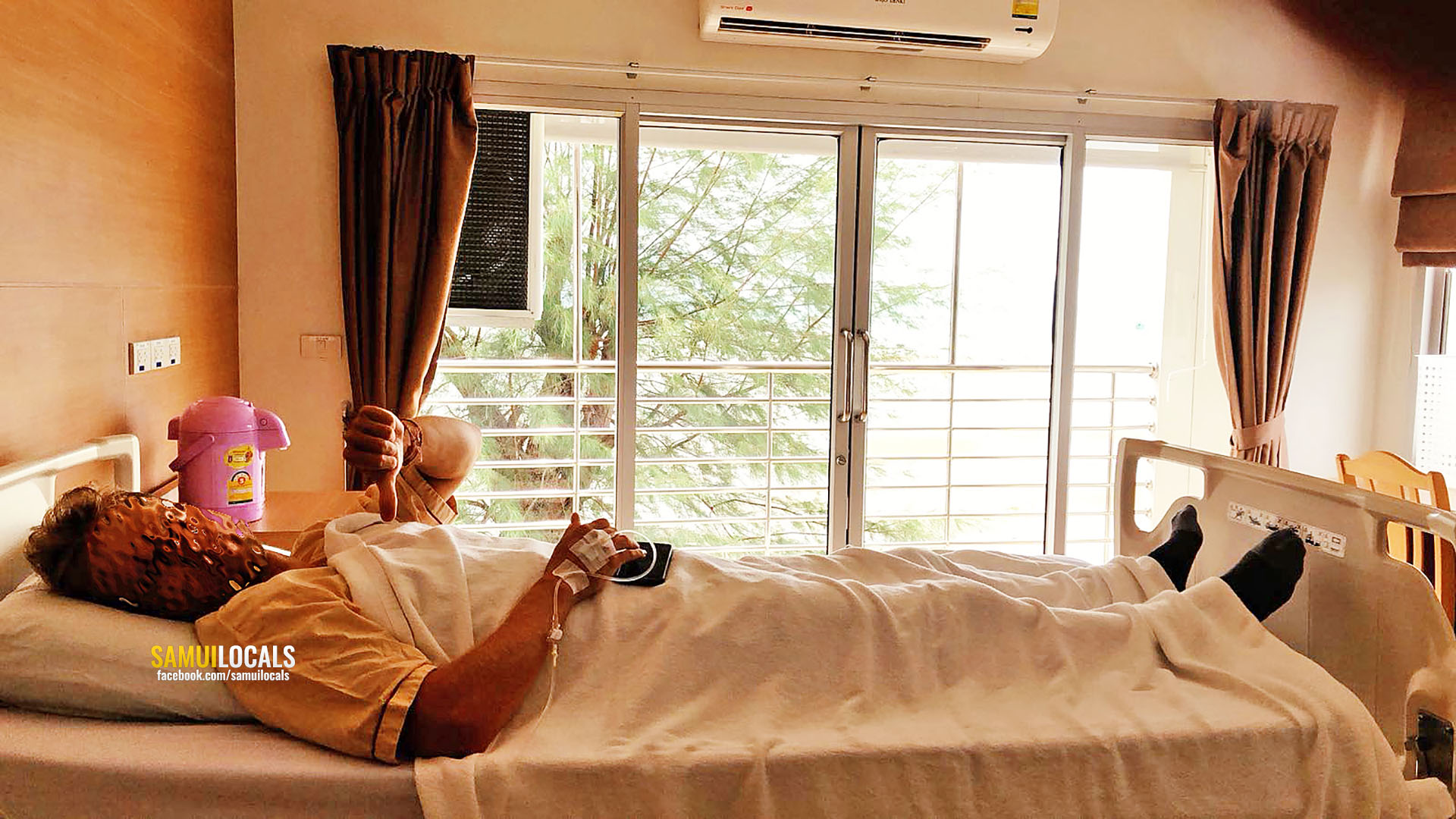
Speaking from personal experience: I once spent about 10 days with dengue fever in a hospital on Koh Samui. I could barely move, had a high fever, extreme headaches and body aches, severe nausea, and ended up on a drip because I couldn't keep anything down - by the end I'd lost around 8kg. And I'm normally someone who doesn't rush to hospital over every little thing. But the course varies a lot from person to person: some ride it out at home in a few days, others, like me, end up in hospital for weeks. If you develop symptoms on Koh Samui, it's better to go to hospital a little too early than too late.
Vaccination: what Qdenga actually offers - and for whom
There's now an approved vaccine, Qdenga, but the recommendation is more nuanced than many travel blogs suggest:
- If you've already had a laboratory-confirmed dengue infection and are travelling to a risk area with elevated exposure, Germany's STIKO recommends the vaccine as a travel vaccination for people aged 4 and over. It's given as two doses at least 3 months apart; if the infection was recent, the RKI recommends waiting at least 6 months before vaccinating.
- If you've never had dengue (dengue-naive/seronegative), the RKI/STIKO and the Federal Foreign Office currently give no general recommendation - the potential benefit is lower for this group, and STIKO says a residual risk of a more severe subsequent infection cannot be ruled out. The US CDC/ACIP likewise rates the benefit of Qdenga as lower for previously uninfected travellers and recommends it for frequent travellers or expats in high-risk areas only after an individual risk-benefit discussion with a travel medicine doctor.
Since you generally can't be sure whether you've already had a (possibly unnoticed) infection, talk to a tropical or travel medicine clinic before your trip about the benefits and risks in your specific case.
Case numbers: how much dengue has Thailand seen recently?
According to the Bangkok Metropolitan Administration's Health Department, around 12,144 dengue cases and 16 deaths were reported nationwide up to 31 May 2025, an incidence rate of 18.38 cases per 100,000 population. For 2026, the WHO's South-East Asia weekly bulletin reported 752 cases in Thailand in week 30 (to 26 July 2026) - a 44% drop on the previous week, with overall 2026 numbers running below 2025 levels.
Worth noting for context: these figures are nationwide, and we don't have a separately maintained, regularly updated count just for Koh Samui or Surat Thani province. Dengue occurs across the whole country rather than in a few fixed regions - for the most current, reliable figures, check directly with Thailand's Department of Disease Control or the WHO's South-East Asia situation reports.
When is the risk highest?
Nationwide, dengue case numbers typically start rising from April, according to data from the Bureau of Epidemiology (Department of Disease Control), peaking in July/August during the rainy season and declining from October - more standing water means more breeding sites for the Aedes mosquito.
| Period (nationwide) | Dengue activity |
|---|---|
| January - March | low |
| April - June | rising |
| July - September | peak |
| October - December | declining, but not zero |
This curve reflects the nationwide pattern. Koh Samui and the other Gulf islands, as we explain in our article Koh Samui weather and the truth about the rainy season, have a reversed rainy season (roughly October to December instead of May to October). So don't rely on the nationwide curve here - protect yourself against mosquito bites on Koh Samui consistently, all year round.
How to protect yourself from mosquito bites

The most reliable protection against the day-biting Aedes mosquito is consistent bite prevention:
- Apply a mosquito repellent with at least 50% DEET generously to all exposed skin, not just a quick spray - rub it in like a lotion, including your palms for reapplying.
- Wear light-coloured, long clothing during the day, especially in the early morning and evening.
- Use air conditioning or a mosquito net in your room, and avoid standing water in plant pots or buckets at your accommodation.
- DEET sprays are available both locally in Thailand and at home - what matters is the active ingredient concentration, not the country it was bought in.

That one minute of effort noticeably lowers an already-low risk further - so you can enjoy your well-earned holiday on Koh Samui with peace of mind.
Frequently asked questions
How likely are you to catch dengue fever in Thailand?
For any individual traveller, the risk is low - in the first five months of 2025, around 12,144 cases were reported nationwide among a population of nearly 66 million (incidence 18.38 per 100,000). A residual risk remains, though, so consistent mosquito protection is still worthwhile.
How soon after a mosquito bite do dengue symptoms appear?
According to the RKI and the Federal Foreign Office, the incubation period is 3 to 14 days. So if you suddenly develop a high fever only after returning home, be sure to mention your trip to Thailand when you see a doctor.
Which parts of Thailand have the highest dengue risk?
Dengue occurs across all of Thailand; there's no officially defined "safe" zone. Thailand's Department of Disease Control maintains an ongoing overview, but in any region, consistent mosquito protection is the only reliable safeguard.
Is there a dengue vaccine for travellers to Thailand?
Yes, Qdenga - but the recommendation depends on your serostatus. For people with a previous laboratory-confirmed dengue infection, Germany's STIKO recommends the vaccine before travel to risk areas. For dengue-naive travellers, there's currently no general recommendation - individual advice from a tropical or travel medicine doctor matters more here than a one-size-fits-all answer.
For more on preparing your trip, see our articles on the Thailand visa 2026 for tourists, the cost of a holiday on Koh Samui, and the best time to visit Koh Samui.
Keep reading

Lamai, Koh Samui: Top 10 Things to Do and See
Lamai, Koh Samui in 2026: Hin Ta Hin Yai, the night markets, the viewpoint zipline, Wat Lamai and Muay Thai – the best things to do.

Water Sports on Koh Samui: A 2026 Guide to Every Activity
Every water sport on Koh Samui in 2026: beaches, seasons, honest price ranges, and safety notes on jet ski scams, life jackets and rip currents.

Koh Samui Yoga Retreat: Yoga & Wellness 2026
Yoga retreat Koh Samui 2026: how Natural Detox Resort at Lamai Beach works, what Vikasa and Kamalaya offer, and which option suits you.